OmniBehavior: Towards Real-world Human Behavior Simulation

Benchmarking Large Language Models on Long-horizon, Cross-scenario, Heterogeneous Behavior Traces

Jiawei Chen1,2โ€ , Ruoxi Xu1,2โ€ , Boxi Cao1, Ruotong Pan3, Yunfei Zhang3, Yifei Hu3,
Yong Du3, Tingting Gao3, Han Li3, Yaojie Lu1, Yingfei Sun2,
Xianpei Han1, Le Sun1, Xiangyu Wu3, Hongyu Lin1
1ISCAS, 2UCAS, 3Kuaishou Technology

[2026.09.25] ๐ŸŽ‰ OmniBehavior has been accepted to NeurIPS 2026! Congratulations to all co-authors, and big thanks for everyoneโ€™s contributions!

[2026.05.18] ๐Ÿš€ The full OmniBehavior dataset is now publicly available on HuggingFace, including complete raw user behavior traces, evaluation code, and synchronized releases of both Chinese and English versions.

๐Ÿ“ฅ Download here: OmniBehavior Dataset

Introduction

    The holistic modeling of human behavior is central to a wide range of disciplines. While Large Language Models (LLMs) have raised the prospect of serving as general-purpose user-simulators, the empirical basis for assessing their capabilities remains systematically insufficient. Existing benchmarks suffer from critical limitations:
    (1) They are confined to isolated scenarios with narrow action spaces (e.g., exclusively focusing on video browsing or e-commerce dialogue).
    (2) Such narrow focus overlooks the holistic, interconnected nature of authentic human decision-making and preferences.
    (3) They fail to assess whether LLMs can transcend fragmented data to model long-horizon causal structures.

    To bridge this gap, we present OmniBehavior, the first user simulation benchmark built entirely on real-world data that simultaneously captures long-horizon, cross-scenario, and heterogeneous behavioral patterns. Collected from Kuaishou, OmniBehavior aggregates complete interaction traces from representative users over a three-month period across 5 diverse scenarios.
    Comprehensive evaluation of current state-of-the-art closed and open-source LLMs reveals substantial limitations. For instance, the best-performing LLM (Claude-4.5-Opus) achieves an overall score of only 44.55, and F1 scores on binary behavior prediction for most models do not exceed 40%. This proves that current LLMs struggle to accurately simulate complex, long-horizon user behavior traces.
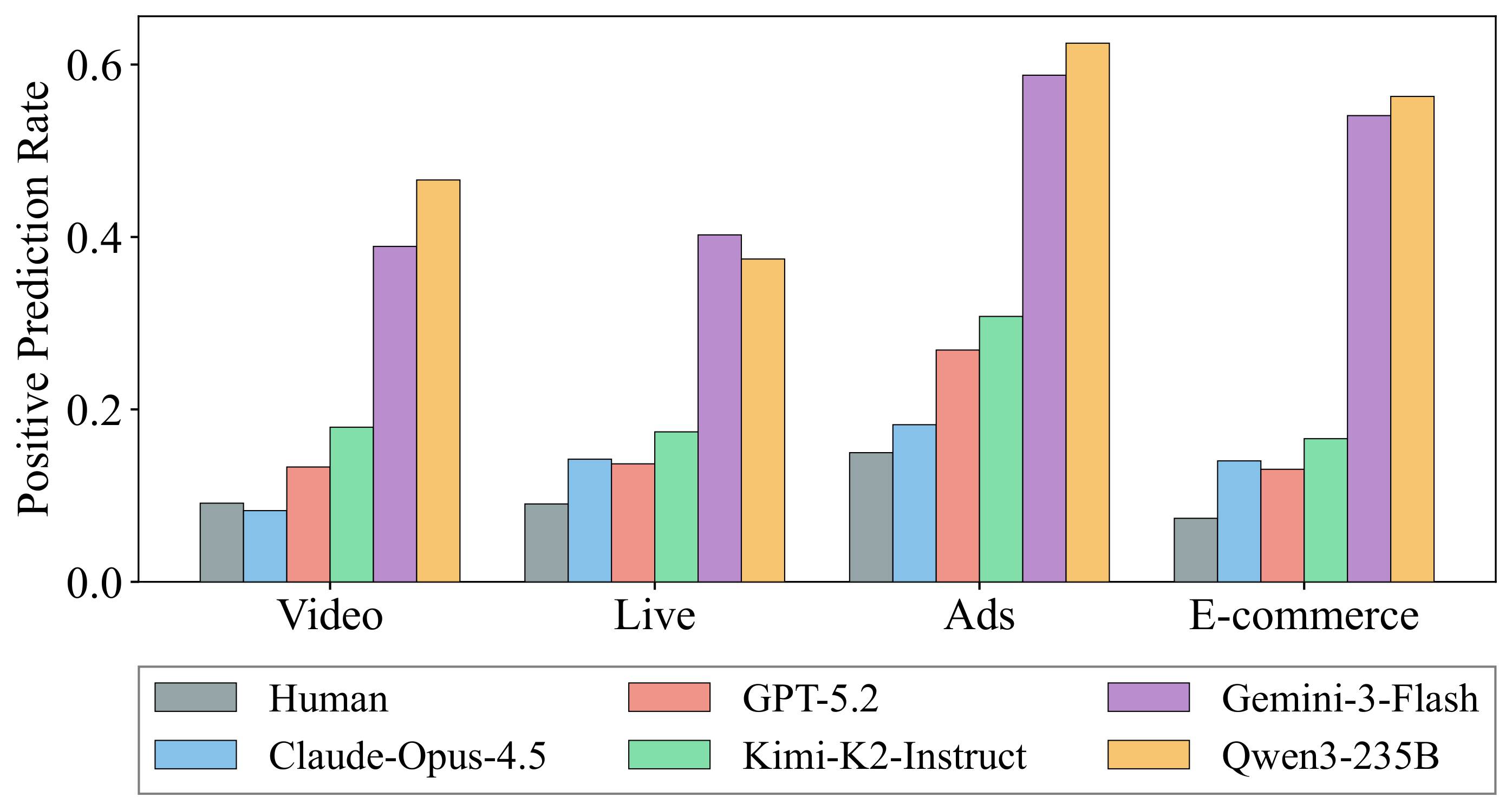
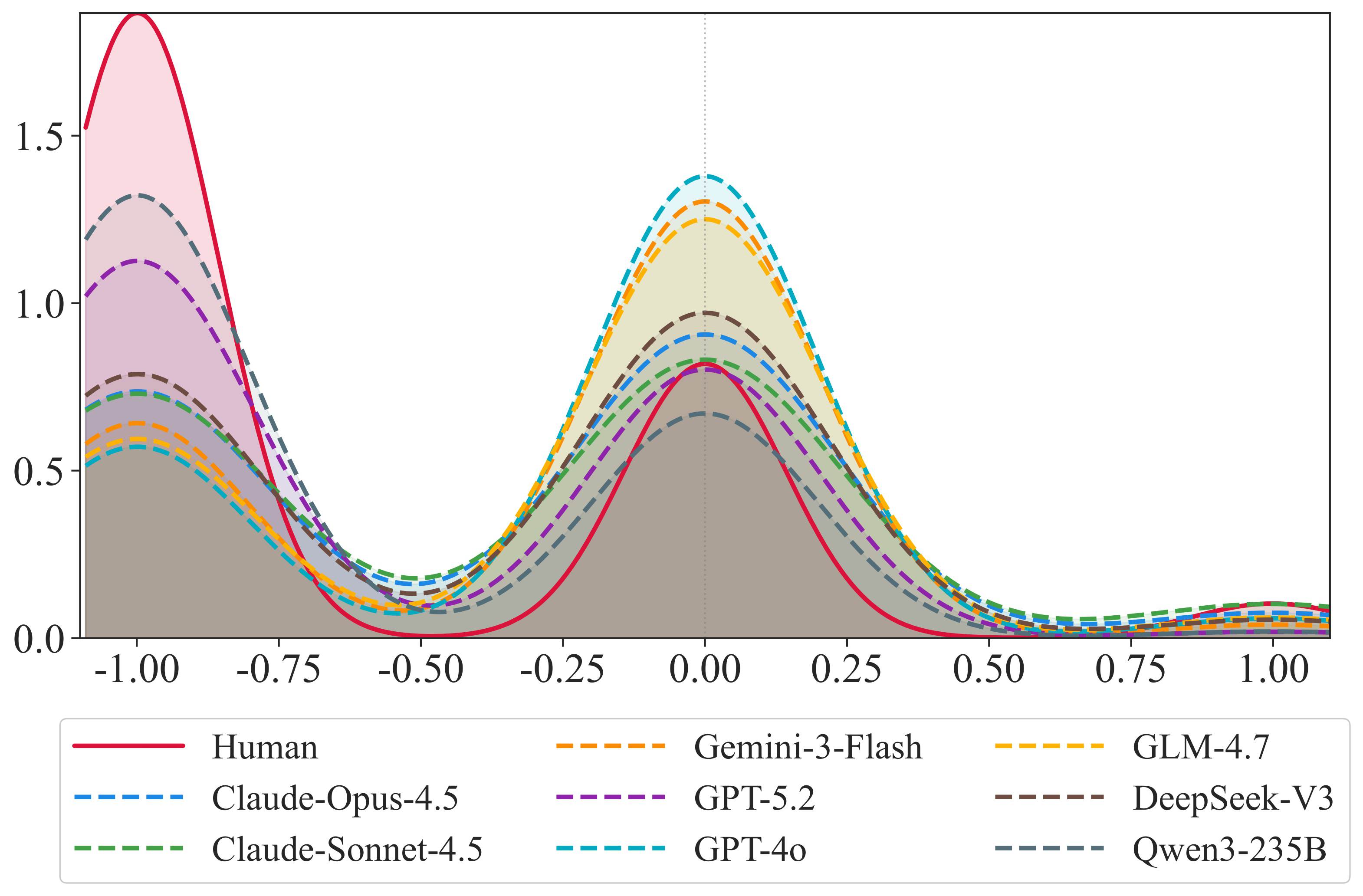
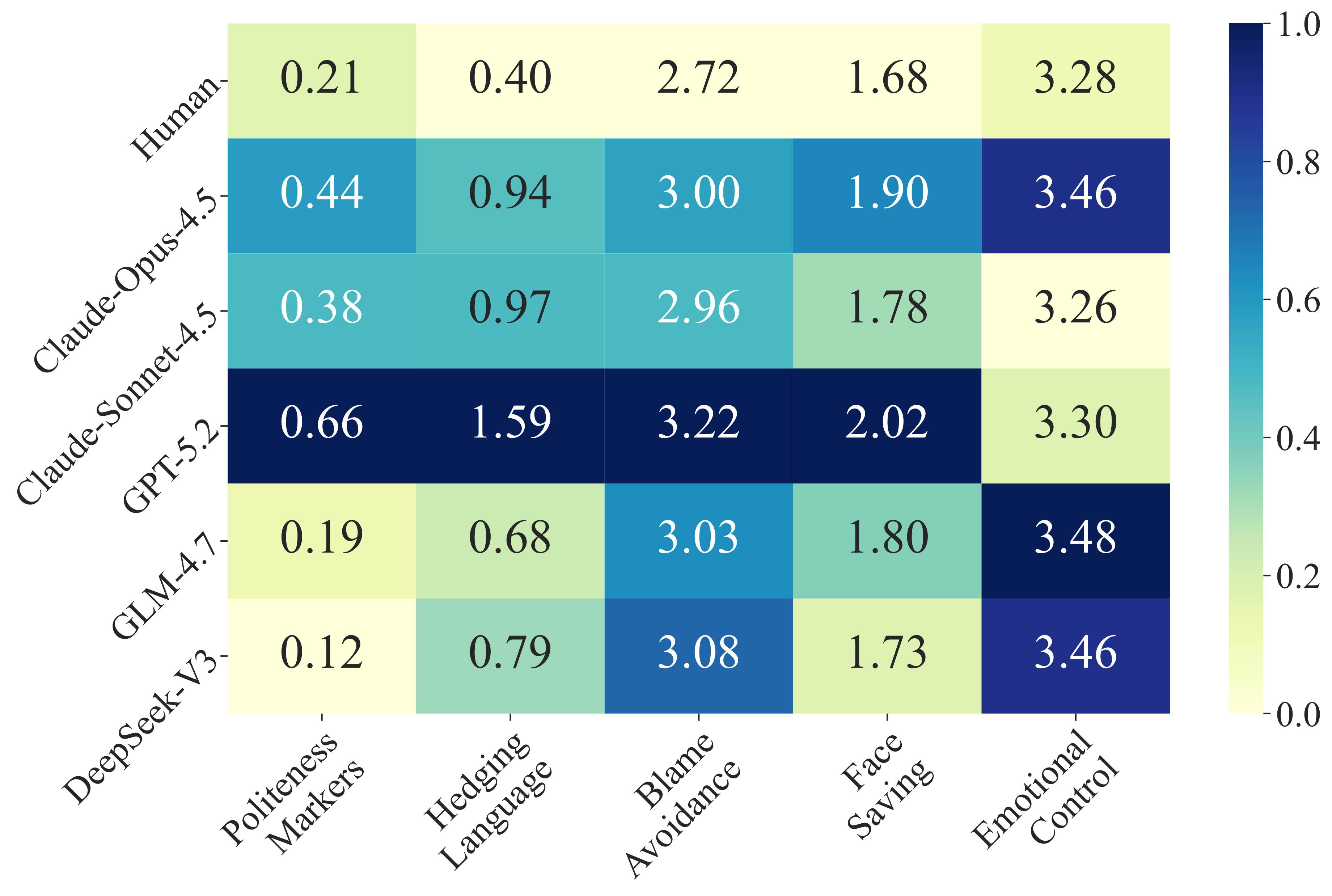
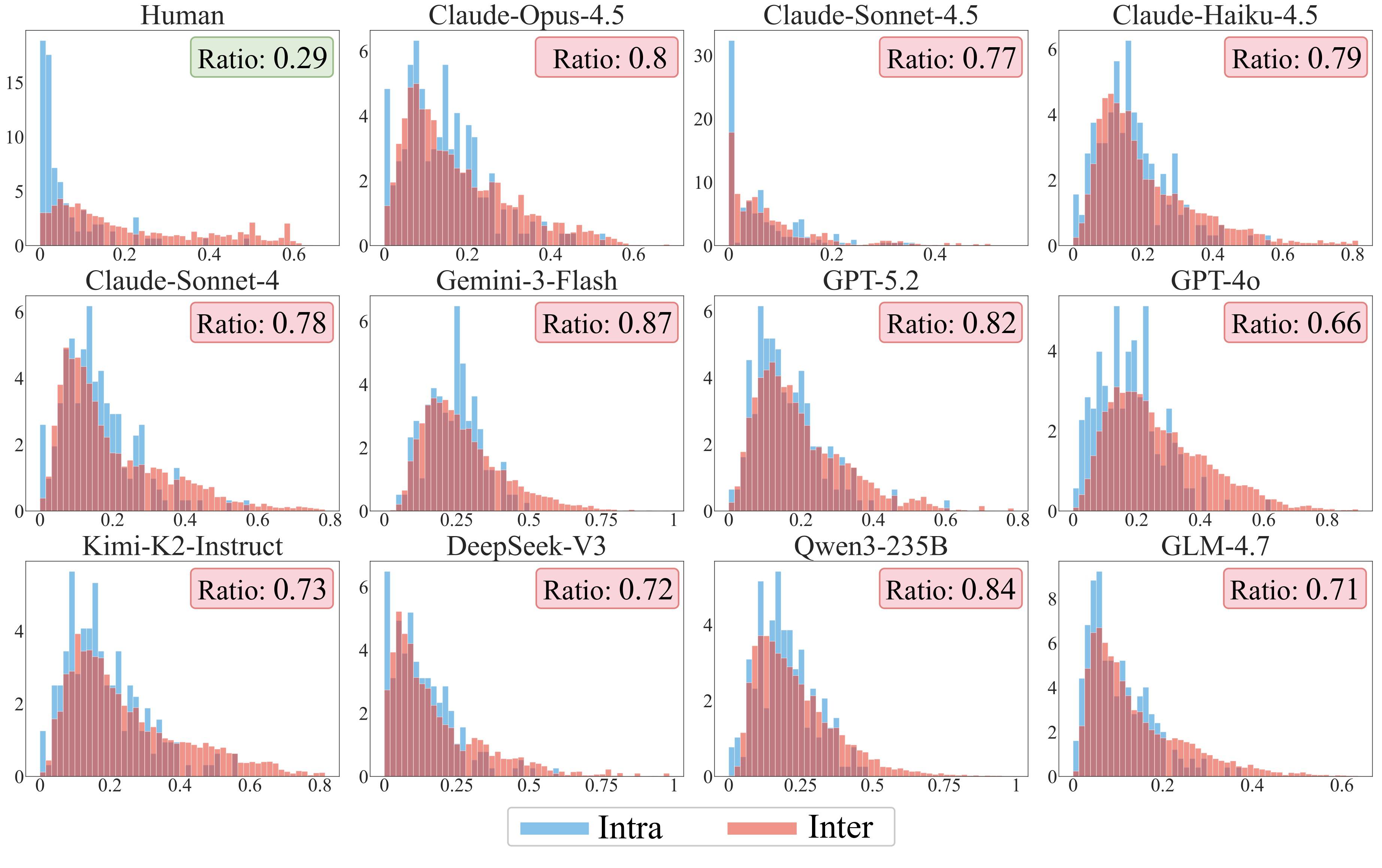
    Crucially, our study uncovers a fundamental structural bias in current LLM simulators: they converge toward a "positivity-and-average" representation. This Utopian bias and hyper-activity blur individual-specific differences, discarding long-tail behaviors and negative feedback signals. OmniBehavior provides a vital framework to guide the genuine modeling of real human diversity.
data-composition

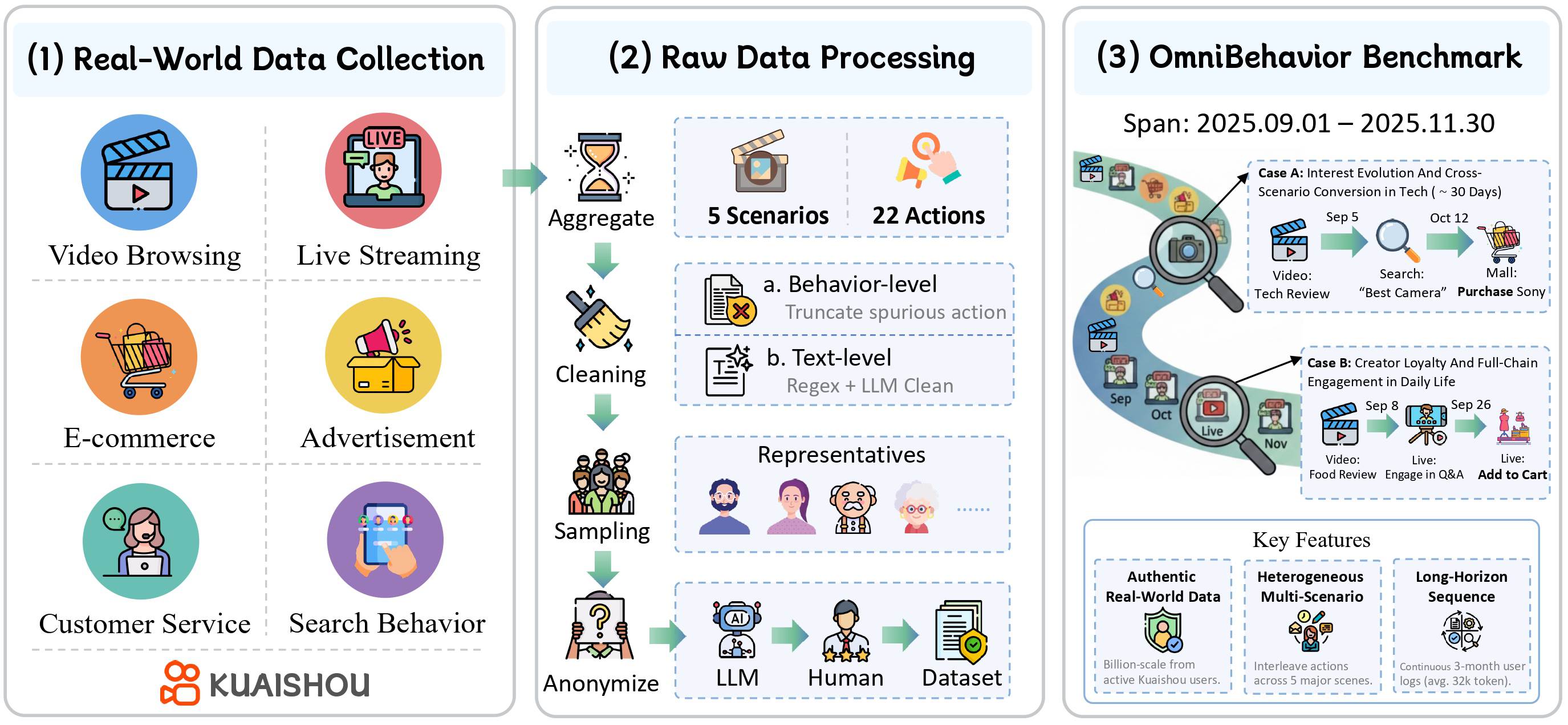
Overview of OmniBehavior, a real-world comprehensive benchmark for evaluating LLM-based user simulators. The benchmark is constructed in three stages:
    (1) Data Collection: aggregation of real-world logs from Kuaishou platform across five major scenarios.
    (2) Data Processing: multi-modal fusion, two-level cleaning, representative sampling, and anonymization.
    (3) Benchmark Construction: the resulting dataset captures long-horizon, cross-scenario behavior traces, providing as a high-fidelity testbed for evaluating LLM-based user simulators in real-world industrial settings.

OmniBehavior Benchmark

Benchmark Scope

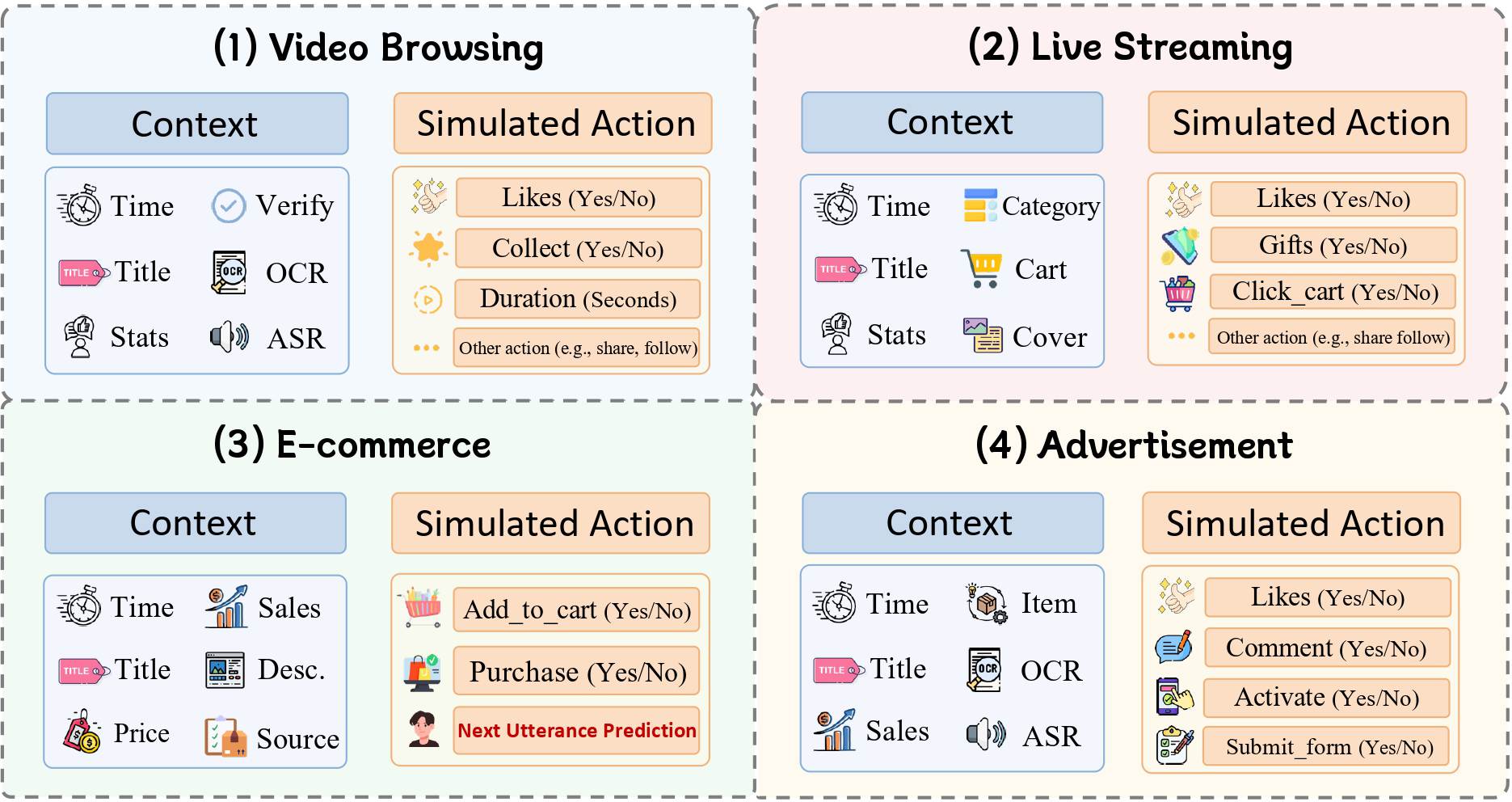
We construct a unified simulation environment covering five major user activities on Kuaishou platform (including customer service dialogues within the E-commerce scenario). The framework requires the agent to predict diverse behaviors (e.g., watch duration, purchase, comment) based on scenario-specific contexts, serving as a comprehensive testbed for high-fidelity user simulation.

data-composition


Single-scenario vs. Multi-scenario Profiles

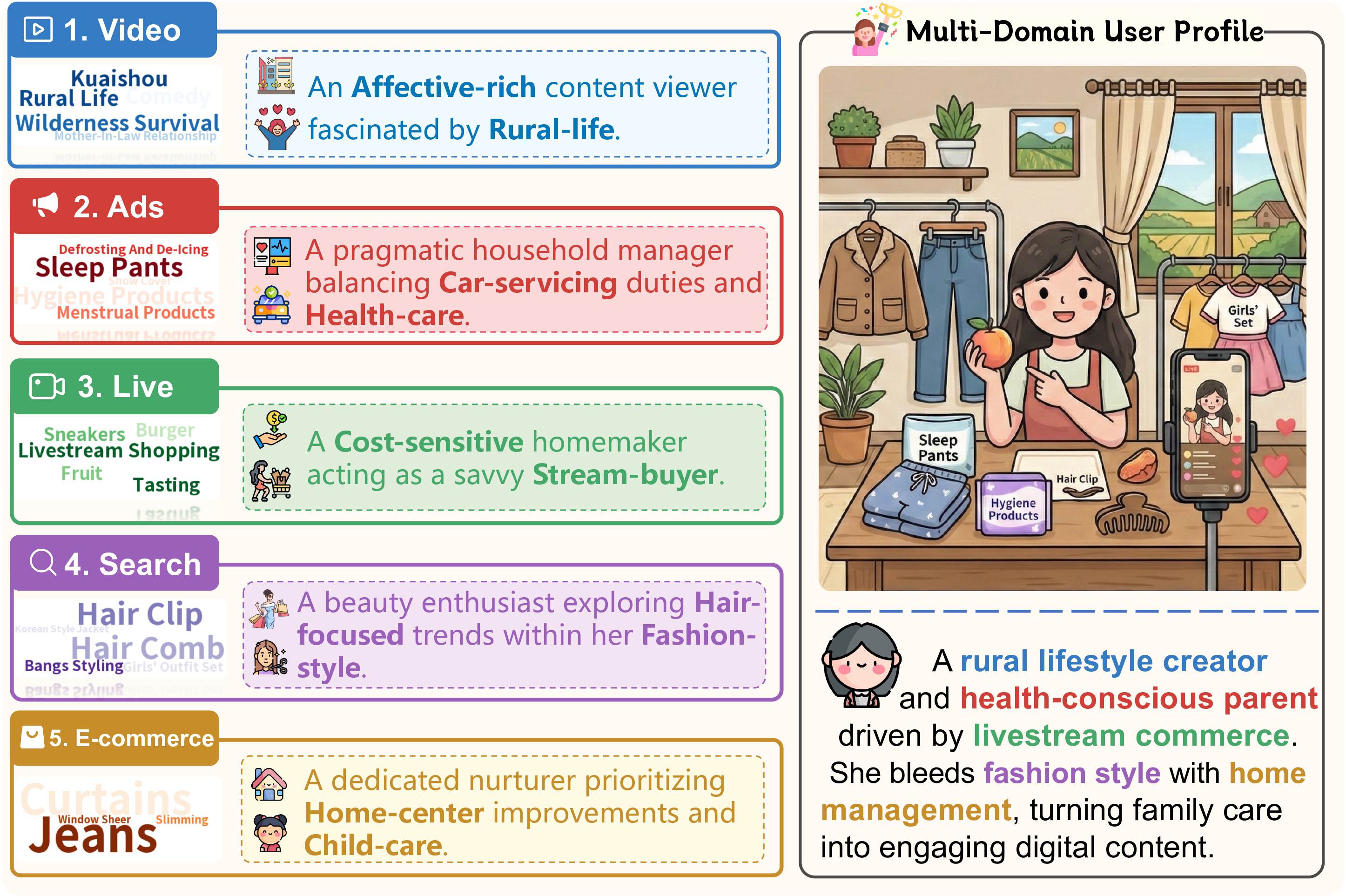
User profile reconstruction based on Single-scenario vs. Multi-scenario data. To assess whether single-scenario data is sufficient to model user preferences, we compare single-scenario and multi-scenario settings through qualitative profile reconstruction. Using Claude-Sonnet-4.5 to extract interests from interaction histories, we build user word clouds and summaries. As illustrated, profiles derived from single-scenario data are often fragmented and biased. In contrast, multi-scenario data provides richer contextual signals that better capture a user's stable and essential characteristics.

User profile reconstruction

Cross-scenario Causal Chain Analysis

We present a representative case study of a 12-day causal chain leading to a purchase event. After an initial search for "Xiaomi Launch Event", the user interacts with related items across various scenarios, eventually adding the item to the cart during a live stream and completing the order. This confirms that decisions stem from long-term, cross-scenario accumulation. Benchmarks limited to short sessions or single scenarios cause a form of "causal amputation," underscoring that ultra-long sequences and multi-scenario environments are necessary to preserve causal integrity.

Cross-scenario causal chain case study

Experimental Results


Comprehensive comparison of LLM backbones on the OmniBehavior Benchmark. We categorize user behaviors into three types: binary behaviors (e.g., clicks), continuous behaviors (e.g., duration), and textual behaviors (e.g., dialogue). The overall score represents the aggregated performance. The best/second best scores are bolded/underlined.

Model Video Live Ads E-commerce Overall Score
Binary Continuous Binary Binary Binary Textual
Closed-source
Claude-Opus-4.5 33.05 64.19 31.70 51.16 29.98 57.21 44.55
Claude-Sonnet-4.5 18.85 65.95 25.00 42.77 36.13 54.26 40.49
Claude-Haiku-4.5 22.84 63.26 26.11 30.00 26.37 50.29 36.48
Claude-Sonnet-4 25.29 64.62 28.86 36.81 16.50 49.13 36.87
Gemini-3-Flash 22.09 53.79 25.61 24.64 19.65 49.80 32.60
GPT-5.2 31.54 65.01 28.63 33.60 29.32 46.29 39.07
GPT-4o 27.88 62.75 28.15 25.24 28.66 44.92 36.27
Open-source
GLM-4.7 26.86 64.43 28.97 40.34 32.90 55.25 41.46
DeepSeek-V3 21.42 63.98 27.92 25.74 33.31 52.13 37.42
Kimi-K2-Instruct 23.30 64.80 28.60 31.19 29.94 47.83 37.61
Qwen3-235B 18.26 62.38 23.84 23.19 19.22 45.74 32.11

The Structural Bias of LLM Simulator

Citation

If you find our work useful in your research, please consider citing our paper.

@article{chen2026towards,
  title={Towards real-world human behavior simulation: Benchmarking large language models on long-horizon, cross-scenario, heterogeneous behavior traces},
  author={Chen, Jiawei and Xu, Ruoxi and Cao, Boxi and Pan, Ruotong and Zhang, Yunfei and Hu, Yifei and Du, Yong and Gao, Tingting and others},
  journal={arXiv preprint arXiv:2604.08362},
  year={2026}
}